



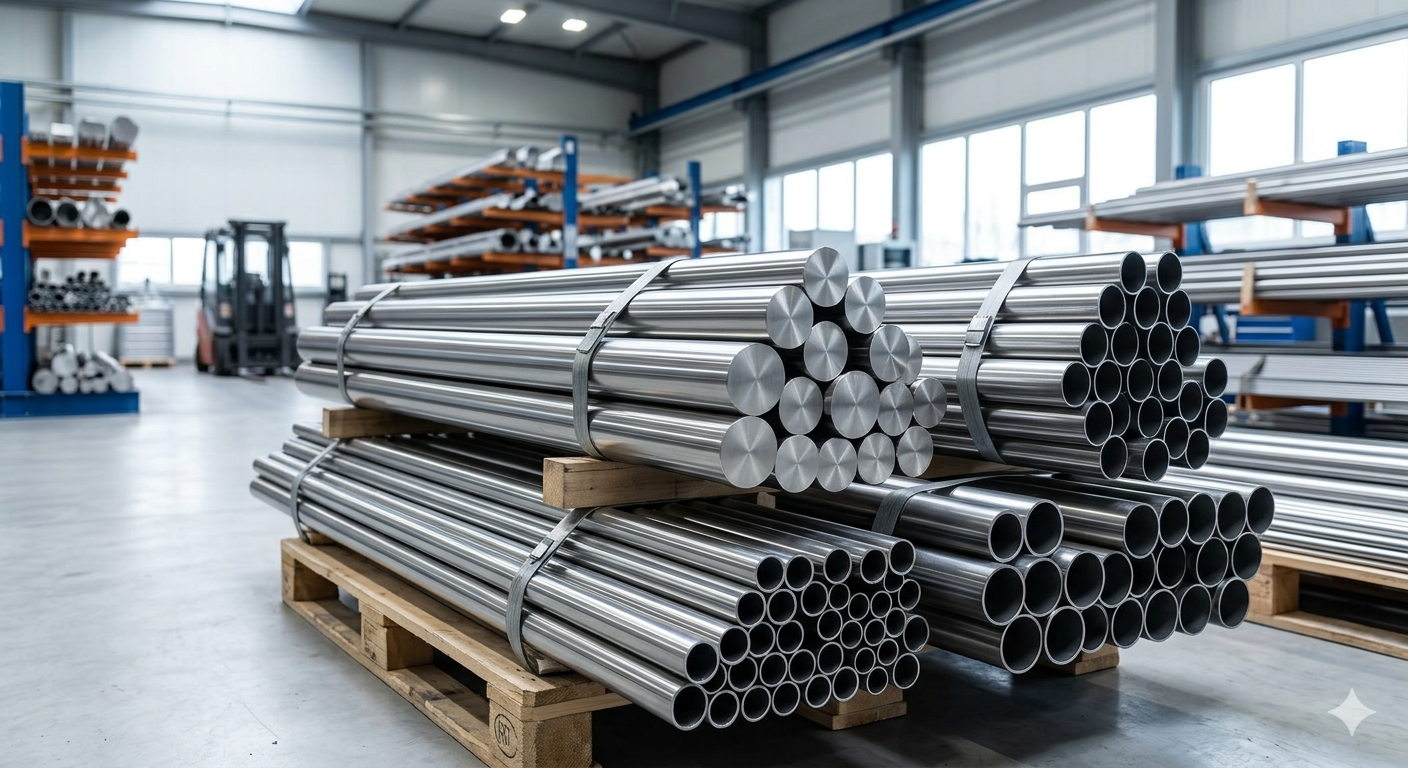
The history of this material dates back to the early 20th century, when British metallurgist Harry Brearley, experimenting with alloys for rifle barrels, accidentally discovered that steel with added chromium does not corrode in acid. Since then, the technology has come a long way – from simple alloys “victorious over rust” to state-of-the-art materials used in nuclear reactors and medicine. In this study, we will examine every stage of its life – from raw scrap fed into an electric arc furnace, through complex refining processes in argon-oxygen converters, to finished products such as seamless pipes or flanges. We will also discuss how to care for this material so that it serves us for decades and debunk myths concerning its “indestructibility.”
As industry experts, we know that stainless steel is not a monolith. It is an entire family of alloys, each with its own “personality” derived from its chemical composition. Understanding these nuances is crucial not only for engineers designing pipelines in the petrochemical industry but also for architects selecting materials for façades in coastal zones or consumers purchasing cookware. In the era of sustainable development, the durability and full recyclability of stainless steel make it a material of the future. We invite you to read this compendium, which aspires to become the definitive source of knowledge on this subject in the Polish internet.
How Stainless Steel Is Made – Chemical Anatomy and Technological Foundations
Understanding the essence of stainless steel requires delving into its chemical composition, as it is precisely at the molecular level that the magic occurs which distinguishes this material from ordinary iron. In the simplest terms, every steel is an alloy of iron and carbon. However, what defines steel as “stainless” (known in Anglo-Saxon literature as stainless steel or inox from the French inoxydable) is the chromium content. According to metallurgical definitions and standards such as AISI or EN, for an iron alloy to be classified in this elite group, it must contain a minimum of 10.5% chromium. This is not an arbitrary number invented by bureaucrats – it is the threshold at which the phenomenon of passivation occurs.
The Phenomenon of the Passive Layer – A Self-Healing Shield
Chromium is the key to success. In contact with oxygen present in the atmosphere, chromium contained in the alloy (not only on its surface) reacts instantly, forming a layer of chromium (III) oxide – Cr₂O₃. This layer is invisible to the naked eye, only a few nanometres thick (a few atomic layers), but possesses extraordinary properties. It is dense, chemically stable, and strongly adherent to the substrate, cutting off oxygen access to the deeper iron layers. In ordinary carbon steel, oxygen reacts with iron to form a porous, flaking oxide (rust), which falls off, exposing fresh metal to further degradation. In stainless steel, the chromium oxide acts like a hermetic skin. Moreover, this layer has the ability to self-regenerate – this is the true superpower of stainless steel. If the steel surface is scratched or mechanically damaged, chromium exposed deep within the scratch immediately reacts with oxygen from air or water, rebuilding the protective barrier within a fraction of a second. This is why stainless steel remains shiny even after years of use, provided the environment supplies the minimal amount of oxygen necessary for this process.
The Alchemy of Alloying Additions
However, modern stainless steel is much more than just iron, carbon, and chromium. To achieve specific mechanical properties such as increased ductility, resistance to high temperatures, or durability against particular types of chemical corrosion, a range of other elements is introduced into the alloy, creating a complex metallurgical “soup.”
Nickel (Ni) is one of the most important alloying additions, especially in the most popular group of austenitic steels (300 series, e.g., 304). Nickel stabilises the austenitic crystalline structure (face-centred cubic), which makes the steel non-magnetic in the annealed state and significantly more ductile, as well as improving its strength at high temperatures. Thanks to nickel, we can deep-draw sinks without cracking the material.
Molybdenum (Mo), on the other hand, is the “heavy artillery” in the fight against corrosion. Its addition (usually 2-3% in grade 316) drastically increases resistance to pitting corrosion in environments rich in chloride ions, such as seawater or road brines. The mechanism of molybdenum’s action involves strengthening the passive layer, making it more resistant to localised breakdown.
Titanium (Ti) and Niobium (Nb) serve as carbon stabilisers. At high temperatures (e.g., during welding), carbon tends to combine with chromium, forming chromium carbides at grain boundaries. This depletes the surrounding zones of chromium, leading to intergranular corrosion. The addition of titanium (as in grade 321) causes carbon to “prefer” to combine with titanium, leaving chromium in solid solution where it can perform its protective function.
Nitrogen (N), often overlooked in simple descriptions, is a key component of modern Duplex steels. It increases mechanical strength (through solid solution strengthening) and resistance to crevice corrosion, allowing for a reduction in the content of expensive nickel.
The table below presents a simplified classification of the influence of the main elements on the properties of stainless steel, which helps to better understand the decisions of materials engineers:
|
Element |
Main role in the alloy |
Effect on structure |
Typical application |
|
Chromium (Cr) |
Formation of passive layer, corrosion resistance. |
Ferrite stabiliser. |
All stainless steels (base). |
|
Nickel (Ni) |
Ductility, malleability, acid resistance. |
Austenite stabiliser. |
300 series (e.g. 304, 316), food industry. |
|
Molybdenum (Mo) |
Resistance to pitting corrosion (chlorides). |
Ferrite stabiliser. |
316 series, marine and chemical installations. |
|
Carbon (C) |
Hardness, mechanical strength. |
Strong austenite stabiliser. |
Knives, tools (martensitic steels). |
|
Titanium (Ti) |
Prevention of intergranular corrosion (welding). |
Ferrite stabiliser. |
Welded components, aerospace. |
|
Nitrogen (N) |
Strength, resistance to pitting. |
Austenite stabiliser. |
Duplex steels, modern constructions. |
The process of creating the ideal mixture is thus a balance on the edge of physical chemistry and materials engineering, where every tenth of a percent of a given element can change the purpose of the finished product, deciding whether a particular alloy will orbit the Earth or end up in the dishwasher in our kitchen.
Stainless steel vs carbon steel – comparative analysis of differences and applications
We often encounter the question of why use expensive stainless steel at all, when carbon steel (often called "black steel") is cheaper and widely available. The differences between these materials are fundamental and go far beyond mere appearance or purchase price. This should be viewed through the lens of total life cycle cost (LCC - Life Cycle Costing). Although carbon steel has excellent strength properties and is easy to machine, it is thermodynamically unstable in our oxygen-rich environment. Without appropriate paint coatings, hot-dip galvanising, or cathodic protection systems, it quickly reverts to its natural oxide form – rust. This process degrades the material, leading to loss of structural load-bearing capacity. Stainless steel, although more expensive to purchase (mainly due to the prices of nickel and chromium and a more energy-intensive production process), is often cheaper over the long term because it does not require painting, coating renovation, or frequent replacement.
Physical properties: density, heat and magnetism
From a physical perspective, engineers must consider a number of differences that influence design. Stainless steel is generally slightly denser than carbon steel (approximately 8000 kg/m³ compared to 7850 kg/m³ for carbon steel), meaning that a component of the same dimensions will be somewhat heavier. Although this difference seems small, on the scale of large bridge or aerospace structures it matters, affecting the strength-to-weight ratio. In aerospace applications, where every gram counts, stainless steel is often replaced by titanium or aluminium, unless high-temperature resistance is required, which aluminium does not provide.
A key parameter often ignored by novice designers is the coefficient of thermal expansion. Stainless steel (especially austenitic) has a significantly higher coefficient of expansion (10–17.3 x 10⁻⁶ m/(m °C)) than carbon steel (10.8–12.5 x 10⁻⁶ m/(m °C)). This means that a stainless steel pipeline transporting hot steam will elongate much more than a black steel pipeline. If the engineer does not anticipate appropriate compensators and expansion loops, thermal stresses can tear fastenings or damage equipment. An illustrative example of this phenomenon is the Eiffel Tower (although made of puddled iron, the principle is the same) – in summer the tower is approximately 15 cm (6 inches) taller than in winter precisely due to metal expansion. In the case of stainless steel, this effect would be even more pronounced.
Another important difference is thermal and electrical conductivity. Carbon steel is a much better heat conductor. Stainless steel is an insulator among metals. This is highly significant during welding: heat introduced into stainless steel does not spread as quickly through the material but accumulates in the weld zone (the so-called hot spot), which can lead to severe distortions (warping) and overheating of the material. Therefore, welding stainless steel requires different current parameters and techniques than welding black steel.
Strength and hardness: the myth of hard stainless steel
Regarding durability, the matter is not straightforward. Although steel is commonly regarded as an extremely hard material, many grades of stainless steel – particularly from the most popular austenitic group (such as 304) – are actually relatively soft and very ductile in the annealed state. Their yield strength is often lower than that of ordinary structural steel. This characteristic is desirable in forming processes, such as deep drawing of sinks or pots, but can be problematic in fastened components. Stainless steel screws tend to experience "galling" in cold conditions, where friction breaks the oxide layer, and the pure metals weld together, seizing the thread permanently. On the other hand, martensitic stainless steels (e.g., 440C, used in knives and bearings) and precipitation-hardened (PH) steels can achieve hardness and strength far exceeding typical carbon steels. The choice between carbon steel and stainless steel is therefore always a compromise between cost, required corrosion resistance, and specific mechanical requirements.
Risk of galvanic corrosion – why must they not be joined?
In workshop and construction practice, there is a fundamental rule: joining carbon steel with stainless steel requires particular caution and expertise. Direct contact between these two metals in the presence of an electrolyte (even moisture from air or rainwater) leads to the formation of a galvanic cell. Stainless steel acts as the more noble metal (cathode), while carbon steel is less noble (anode). As a result, accelerated corrosion of the carbon steel occurs at the contact point – a screw made of ordinary steel screwed into a stainless steel sheet will corrode rapidly, much faster than if it were alone.
Therefore, although welding these materials together is technically possible using special filler metals (e.g., 309L) and buffering techniques, in bolted constructions the use of insulators is recommended. Plastic washers, insulating sleeves, special greases, or painting the contact surface are essential to interrupt the electrical current flow between the metals and prevent galvanic corrosion. Understanding the galvanic series of metals is thus indispensable for every designer working with these materials.
How steel becomes stainless steel – is it based on ordinary steel?
Many laypersons, and even beginner metallurgists, harbour the mistaken belief that stainless steel is simply ordinary steel coated with some "magical" layer, or that in the steel mill, ready blocks of carbon steel are "injected" with chromium. The reality is far more complex and fascinating. Stainless steel is not a modification of existing carbon steel; it is designed and created from scratch as a completely distinct alloy. Indeed, both materials share iron (Fe) as their base, but their production paths diverge already at the stage of charging the furnace.
In modern metallurgy, stainless steel is largely a recycled product. It is usually not smelted from iron ore in a blast furnace, as is common in mass production of structural steel. The main raw material is stainless steel scrap, supplemented with carbon steel scrap and "master alloys" – ferrochromium (FeCr) and ferronickel (FeNi). All these components are charged into a single vessel (an electric furnace) and melted together. This means that chromium and nickel are integral parts of the material’s structure throughout its entire volume. It is not "silver plating". If we cut a stainless steel rod in half, the core will have exactly the same corrosion-resistant properties as the surface. This homogeneity distinguishes stainless steel from galvanised (zinc-coated) steel, where scratching the zinc layer causes the underlying steel to rust.
It is worth noting, however, that there are historical and less commonly used methods in which liquid hot metal from a blast furnace (liquid iron with a high carbon content, derived from ore) is used as a base. In such a process, chromium and nickel ores are added to the liquid iron, followed by complex reduction and decarburisation processes. These methods (e.g., SR-DC-VOD) are more capital-intensive and less frequently used than the standard EAF route based on scrap. Thus, it can be said that although stainless steel shares a common ancestor with "ordinary" steel in the periodic table, its birth is an independent process requiring much greater precision and technological purity.
How does the stainless steel production process proceed?
The production of stainless steel is a spectacle in which extreme temperatures, precise gas chemistry, and enormous mechanical forces play the leading roles. Modern steelworks rely mainly on a two-stage (or three-stage) route, centred on the AOD (Argon Oxygen Decarburisation) process. The invention of the AOD method in the 1960s enabled the mass and economical production of stainless steel as we know it today. Let us follow this process step by step.
Step 1: Melting in an electric arc furnace (EAF)
Everything begins with assembling the "recipe". Stainless scrap, carbon scrap, and ferroalloys are loaded into a large basket. The charge is then placed into the EAF. Powerful graphite (carbon) electrodes are lowered inside. When power is switched on, an electric arc of immense power jumps between the electrodes and the scrap. The temperature inside rises rapidly, exceeding the melting point of steel and reaching even 3000°F (approx. 1650°C) or more. In this furnace, the solid material transforms into molten metal. This process usually lasts from 8 to 12 hours depending on the furnace size and technology. At this stage, the steel is not yet "ready" – it contains many impurities, gases, and an inappropriate (usually too high) carbon content.
Step 2: Decarburisation (refining) – the heart of the AOD process
Molten steel is poured into the AOD converter. Here, the key metallurgical magic takes place. The main challenge in stainless steel production is the removal of carbon (often to levels below 0.03% for grades such as 304L or 316L) while simultaneously preserving chromium. According to the laws of thermodynamics, oxygen preferentially reacts with chromium rather than carbon at high temperatures, which in traditional processes would lead to the loss of valuable chromium in the slag. The AOD (Argon Oxygen Decarburization) method resolves this issue by blowing a mixture of oxygen and argon (or nitrogen) through nozzles at the bottom of the vessel.
The role of argon is crucial here. As an inert gas, it does not participate in the reaction but lowers the partial pressure of carbon monoxide (CO) in the gas bubbles. This alters the chemical equilibrium of the reaction, causing carbon to oxidise preferentially over chromium. As the process continues, the ratio of oxygen to argon is adjusted until the desired carbon content is achieved. At this stage, lime and other fluxes are also added to remove sulphur and other impurities into the slag.
Step 3: Vacuum Refining (VOD – Vacuum Oxygen Decarburization) – an option for demanding applications
For steel grades requiring ultra-low carbon and nitrogen content (e.g. high-purity ferritic steels), the VOD process is additionally employed. The molten steel is transferred to a ladle placed inside a vacuum chamber. Under reduced pressure conditions, the removal of dissolved gases in the steel (hydrogen, nitrogen, oxygen) is significantly more effective. The vacuum also facilitates the reaction of carbon with oxygen, allowing carbon content to be reduced to extremely low levels without chromium loss. This process ensures the highest metallurgical purity.
Step 4: Continuous Casting (CC)
When the chemical composition is ideal (confirmed by rapid laboratory analyses of samples taken from the furnace) and the temperature is appropriate, the molten steel is sent to the continuous casting line. This represents a significant advancement over historical ingot casting. The steel is poured into a water-cooled copper mould. The metal solidifies from the outside, forming a hard “skin” while the core remains molten. The steel strand is drawn downwards, gradually solidifying throughout its volume. Subsequently, gas torches cut the endless strand into sections of specified length. The products of this stage are:
- Slabs: wide and flat blocks from which sheets and strips will be produced.
- Blooms/Billets: square cross-section blocks used for the production of bars, wires, and seamless tubes.
Step 5: Hot Rolling
The solidified slabs are reheated to plasticity temperature (above the recrystallisation temperature) and passed through powerful rollers. Hot rolling reduces the material thickness and imparts a preliminary shape. Hot rolled steel has a rough, dark surface (covered with scale) and less precise dimensions, but it is cheaper and free from internal stresses. It serves as the starting material for further processing or as a finished product for structural applications where aesthetics are not critical.
Step 6: Cold Rolling – precision and finishing
To achieve precise dimensions, a smooth surface, and improved mechanical properties, cold rolling is applied. The material (already at room temperature) is compressed by rollers with enormous force. This process causes strain hardening – the crystal structure deforms, increasing the hardness and strength of the steel by up to 20%, but reducing its ductility. Cold rolling enables the production of sheets as thin as paper and with a mirror-like surface.
Step 7: Annealing and Pickling
Cold rolling introduces significant internal stresses into the material, making it hard but brittle. To restore the ductility necessary for forming (e.g. deep drawing of pots), the steel undergoes annealing. The steel strip passes through a long furnace where it is heated and cooled in a controlled manner. This relaxes the crystal structure. Unfortunately, the high temperature causes the formation of a dark oxide scale on the surface. Therefore, the final essential step is pickling. The steel is immersed in baths containing a mixture of nitric acid and hydrofluoric acid. These acids “eat away” the unsightly scale and the chromium-depleted layer, exposing a clean surface that immediately passivates upon contact with air, regaining its silvery colour and corrosion resistance.
How are final stainless steel products manufactured? (tubes, flanges, sheets)
Raw steel in the form of slabs or coils is only a semi-finished product. To become a useful component in industrial installations, it must undergo further, often drastic transformation.
Seamless tube production – Mannesmann method and pilgering
Seamless stainless steel tubes are the aristocracy in the world of pipelines. They are used where the risk of weld seam failure is unacceptable (high pressures, aggressive chemicals). But how to make a perfect hole in a solid metal bar several metres long? The answer is a process that is ingenious in its simplicity but brutal in execution: skew rolling (piercing), often called the Mannesmann process.
A red-hot round steel billet is fed between two rollers set at an angle to each other. These rollers not only rotate the billet but also pull it forward, pushing it onto a stationary, conical mandrel made of a very hard alloy located along the rolling axis. The compressive and tensile forces acting inside the rotating metal cause its centre to “burst” open just before the mandrel, which then “presses” the interior, forming a thick-walled tube. This is an extremely dynamic process.
However, such a sleeve is uneven and has thick walls. To obtain a precise tube, the pilgering process (pilger rolling) is used cold. The tube is slid onto a precision mandrel and "rolled" by specially shaped rollers that perform a reciprocating motion (like a pilgrim taking two steps forward, one step back – hence the name). This process drastically reduces the wall thickness, elongates the tube (up to 20 times!) and smooths its surface, giving it final dimensions with micron-level precision and the desired mechanical properties through compression.
Flanges – forging versus machining
Flanges are key components connecting pipes with valves and pumps. They can be produced in two main ways: by forging or machining from bar/plate. Experts strongly prefer forged flanges in pressure applications.
In the forging process, a heated piece of metal is compressed by a powerful press or hammer in a die that shapes it. The key advantage of forging is the preservation and orientation of the material’s grain flow. These grains align according to the flange’s shape, providing significantly higher resistance to cracking, impact, and material fatigue.
In contrast, cutting a flange from flat plate or turning it from bar severs the material’s grain, making the component weaker in certain stress directions. After forging, the raw shape (forging) is processed on precision CNC machines, where sealing surfaces (faces) are turned and bolt holes drilled.
Sheets – the art of surface finishing
Sheet production primarily involves rolling, as mentioned earlier, but in stainless steel the key is surface finish. It determines both aesthetics and hygiene.
- 1D (Hot Rolled, Annealed, Pickled): Matte, rough surface. Used in heavy industry where appearance is not important.
- 2B (Cold Rolled, Annealed, Pickled, Skin passed): Smooth, grey, slightly reflective. The most popular standard for tanks and industrial equipment.
- BA (Bright Annealed): Mirror-like surface obtained by annealing in a protective atmosphere (without oxygen access, so no scale forms and no pickling is needed).
- Brushed/Satin: Mechanical texturing (scratches) applied using abrasive belts. Popular in household appliances and architecture as it masks fingerprints.
- Electropolishing: An electrochemical process that removes microscopic surface elevations, creating a perfectly smooth structure that is easy to clean and sterile – standard in pharmaceuticals.
What can be made from stainless steel?
The versatility of stainless steel means its applications are almost endless. We can divide them into obvious ones we encounter daily, and surprising, niche uses known only to specialists.
Typical and industrial applications – the backbone of the economy
The foundation of stainless steel use lies in the chemical, petrochemical and energy industries. Reactors, acid storage tanks, LNG transmission pipelines – wherever aggressive chemicals, high pressure or extreme temperatures (both cryogenic and high) are involved, stainless steel is indispensable. Grades such as 304, 316, and modern Duplexes (2205) are standard.
In the automotive industry, approximately 45-50% of all exhaust systems are now produced from stainless steel. Manufacturers have switched to this material to extend vehicle lifespan and meet emission standards (catalytic converters operate at very high temperatures). Stainless steel is also increasingly used in vehicle load-bearing structures (crash boxes), as it effectively absorbs collision energy due to its ductility.
The medical sector is another realm of "stainless steel". Surgical instruments (scalpels, forceps), orthopaedic implants (screws, plates, artificial joints) are made from this material due to biocompatibility and ease of sterilisation. An interesting application is in MRI scanners (Magnetic Resonance Imaging). Since MRI is a giant magnet, ordinary steel cannot be used (it would be pulled by the magnet). Special austenitic steel variants (e.g., 316L) are used, which are paramagnetic and do not react to magnetic fields, ensuring safety and no image distortion.
Unusual applications and curiosities – soap and textiles
Did you know that stainless steel can serve as soap? So-called "steel soap" is a piece of stainless steel shaped like a bar of soap. It does not clean dirt but has the remarkable property of removing odours. Rubbing hands with such a bar under running water after cutting garlic, onions or handling fish effectively neutralises the smell. The chemical mechanism involves binding sulphur compounds (responsible for unpleasant odours) by metal ions on the steel surface. Sulphur "sticks" to the steel, and water washes away the rest.
Another fascinating, rarely discussed application is in the textile industry. Stainless steel fibres, drawn to a thickness thinner than a human hair, are woven into carpets to prevent the build-up of electrostatic charges (acting as grounding). They are also used in specialised clothing for technicians working with sensitive electronics. Moreover, it is precisely thanks to steel fibres that touchscreen gloves work – steel conducts the electric current from our finger to the capacitive screen, which would not be possible with ordinary wool.
In architecture, stainless steel enables the realisation of visions impossible with other materials. The famous spire of the Chrysler Building in New York, made from Nirosta stainless steel in 1930, still shines today without intensive maintenance, proving the material’s longevity. Modern skyscrapers, such as the Burj Khalifa, use thousands of tonnes of stainless steel on their façades, posing engineering challenges in compensating for thermal expansion – the building "moves" in the desert sun, and panels must shift to avoid cracking.
How to Care for Stainless Steel (Maintenance, Rust, Cleaning)
The name "stainless steel" is a marketing masterpiece, but a technical simplification. It should rather be called "steel that rusts less easily" or "steel with enhanced corrosion resistance". Under adverse conditions, even the best alloy will corrode if it is not properly maintained. The number one enemy is damage to the passive layer and the inability to restore it.
Types of Corrosion – Know Your Enemy
The most dangerous and insidious phenomenon is pitting corrosion. It occurs when aggressive ions (mainly chlorides from sea salt, pool salt, or road salt) locally penetrate the passive layer. This creates a microscopic hole that acts as an anode, while the rest of the large surface acts as a cathode. The corrosion current is concentrated at a small point, causing rapid drilling deep into the material ("drilling" a hole), while the rest of the surface remains shiny and intact. Pits can lead to perforation of pipes or tanks in a very short time.
The second type is crevice corrosion. It appears in tight crevices, for example under a bolt washer, under a gasket, or where two sheets overlap. In such a crevice, the solution is stagnant (not exchanged). The oxygen contained in the water is quickly consumed by passivation, and no new oxygen flows in. When oxygen is depleted, the passive layer cannot be restored. At the same time, chloride ions migrate into the crevice, creating an acidic, aggressive environment that corrodes the metal in hiding.
The third, extremely dangerous phenomenon for industry is stress corrosion cracking (SCC). This is metal cracking caused by the simultaneous action of tensile stresses (e.g., from pressure in a pipe or welding stresses) and a specific corrosive environment (usually chlorides at elevated temperatures above 60°C). The steel cracks suddenly, without prior symptoms (such as wall thinning), which can lead to catastrophic failures. Austenitic steels (such as 304/316) are very susceptible to this, which is why in such conditions they are often replaced by Duplex steels, which are much more resistant to SCC.
Cleaning and Maintenance Protocol
The basis of stainless steel care is regular washing. Paradoxically, stainless steel "likes" to be washed. Often, warm water with a mild detergent (dishwashing liquid) is sufficient to wash away salt deposits and atmospheric dirt, which can become focal points for pitting corrosion. It is absolutely necessary to avoid agents containing chlorides (e.g., bleach based on sodium hypochlorite – Domestos, etc.) and abrasive powders that scratch the surface. The use of steel wool made from ordinary carbon steel is strictly forbidden. They leave microscopic iron filings on the stainless surface, which rust, creating unsightly stains and initiating corrosion of the base material (the so-called foreign corrosion phenomenon).
In the case of thermal discoloration (from welding) or surface rust, the use of specialised chemicals is necessary. These processes are called pickling and passivation. Pickling pastes (containing strong acids) chemically remove contaminants and a thin layer of metal, exposing the "healthy" structure. Then passivating agents (often based on nitric or citric acid) accelerate the natural formation of the chromium oxide layer.
A modern, safer, and more ecological alternative to aggressive pastes is electrochemical cleaning. It uses a device with a carbon fibre brush through which electric current flows, and mild electrolytes (often based on phosphoric acid). This process rapidly removes welding discoloration and simultaneously passivates the surface, without generating toxic fumes.
Caring for stainless steel essentially means ensuring oxygen access to its surface. This material needs to "breathe". Covering it with a thick layer of greasy dirt cuts off oxygen supply, preventing self-healing of the passive layer, which in a humid environment is a direct path to crevice corrosion under deposits. Clean steel is healthy steel.
Summary
Stainless steel is a triumph of engineering over nature. By altering the atomic structure of iron through the addition of chromium and other elements, we have created a material that resists the natural tendency of metals to oxidise. From complex metallurgical processes such as AOD/VOD, through precise rolling and Mannesmann forging, to applications in the most demanding industrial conditions and in our homes – it is a top-class engineering material. Understanding its nature, manufacturing processes, and maintenance principles allows not only appreciation of the technological craftsmanship behind an ordinary pipe or sheet but also conscious and effective utilisation of its potential for many years, minimising environmental impact thanks to its longevity and full recyclability.More than just shiny metal – an introduction to the world of stainless steel
In the world of modern engineering, architecture and everyday life, few materials play as fundamental — and at the same time often underappreciated — a role as stainless steel. To the casual observer it is simply an attractive, silvery material used for cutlery, washing machine drums or the finishing elements of office buildings. But for us, stainless steel is a fascinating alloy with a complex crystalline structure, whose properties arise from precise chemistry and advanced manufacturing processes. The aim of this comprehensive report is not only to explain the technical processes behind this material, but also to provide a deeper understanding of its role in the global economy and the mechanisms that make the “steel that doesn’t rust” engage in a continuous, invisible battle with its environment at the atomic level.
The history of this material dates back to the early 20th century, when British metallurgist Harry Brearley, experimenting with alloys for gun barrels, accidentally discovered that steel with added chromium does not corrode in acid. Since then, the technology has advanced significantly — from simple “victory over rust” alloys to state‑of‑the‑art materials used in nuclear reactors and medicine. In this study, we will examine every stage of its lifecycle — from raw scrap fed into the electric arc furnace, through the complex refining processes in argon‑oxygen converters, to finished products such as seamless pipes or flanges. We will also discuss how to care for this material so it will serve us for decades, and we will debunk myths about its “indestructibility”.
As industry experts, we know that stainless steel is not a monolith. It is an entire family of alloys, each with its own “personality” determined by its chemical composition. Understanding these nuances is crucial not only for engineers designing piping in the petrochemical industry, but also for architects selecting materials for façades in coastal environments or consumers choosing cookware. In the era of sustainability, the durability and full recyclability of stainless steel make it a material for the future. We invite you to read this compendium, which aspires to become the definitive source of knowledge on this subject in the Polish internet.
How stainless steel is made — the chemical anatomy and technological foundations
Understanding the essence of stainless steel requires delving into its chemical composition, because it is at the molecular level that the magic distinguishing this material from ordinary iron takes place. In the simplest terms, every steel is an alloy of iron and carbon. However, what defines a steel as “stainless” (in Anglo‑Saxon literature referred to as stainless steel or inox, from the French inoxydable) is the chromium content. According to metallurgical definitions and standards such as AISI and EN, for an iron alloy to be classified into this elite group, it must