



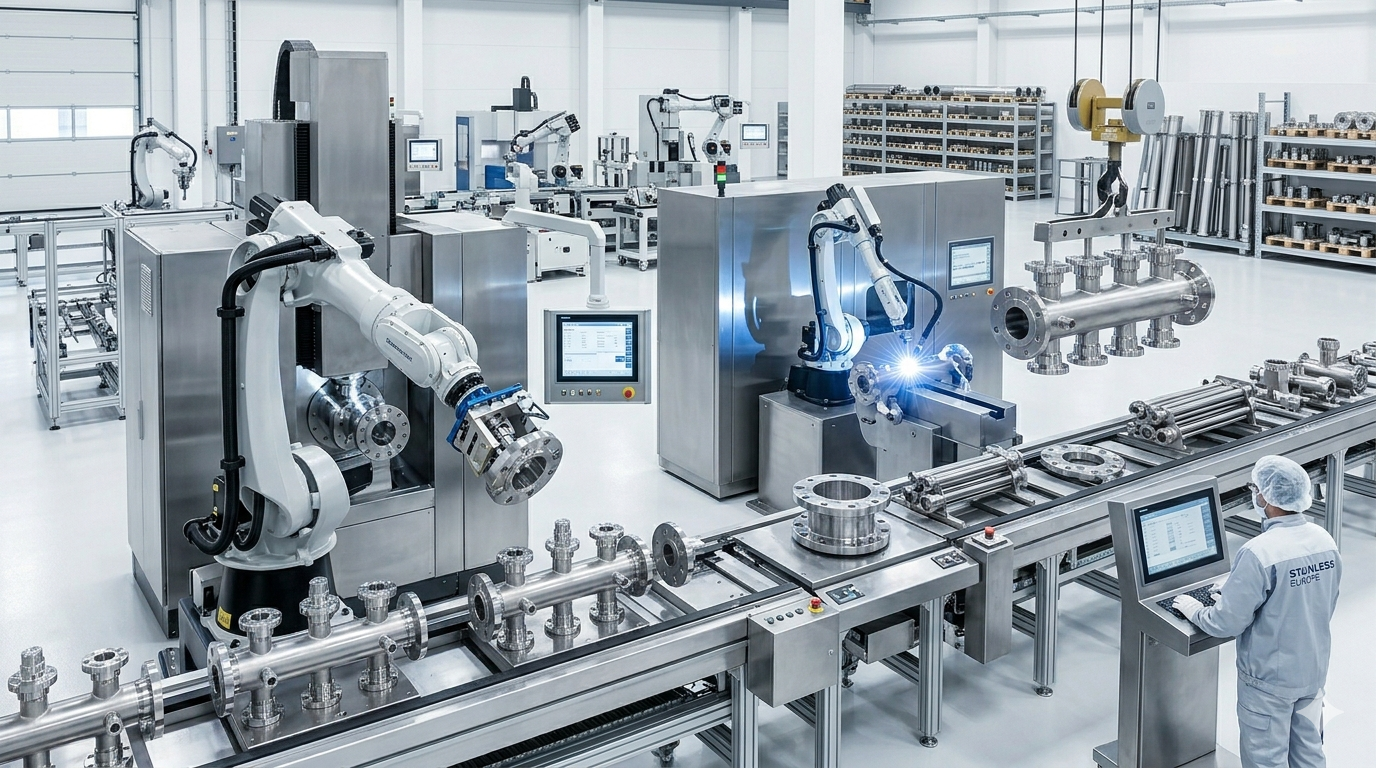
Understanding the differences between various types of stainless steel is not only the domain of engineers in white coats or welders in helmets. It is knowledge that allows one to make informed product choices, understand why one pot costs fifty pounds and another five hundred, and appreciate the technological magic that ensures bridges do not collapse under corrosion and that implants in our bodies are safe. In this extensive study, like an experienced guide, I will lead you through the thicket of technical designations, chemical nuances, and market dependencies. We will learn what unites and separates acid-resistant steel from heat-resistant steel, why Chinese mills dictate price conditions, and how it is possible for steel to be simultaneously as hard as diamond and resistant to rust.
Stainless steel is a material that is 100% recyclable, making it one of the most environmentally friendly construction materials on our planet. Approximately 88% of global production comes from recycled material, a result envied by other industries. But before we dive into the technical details of grades such as 1.4404 or 17-4PH, we must understand the foundation – what truly makes steel "noble."
Typical Steel vs Stainless Steel
What Differentiates Typical Steel from Stainless Steel: An Analysis of Differences, Similarities, and the "Magical" Passive Layer
We often ask ourselves: why does an ordinary nail left out in the rain become covered with a rusty coating after a few days, while a balcony railing shines for years despite snow and sleet? The answer lies in chemistry, specifically in one element that changed the history of metallurgy – chromium.
Both typical carbon steel (often called black steel) and stainless steel are based on the same foundation: iron and carbon. This is their shared heritage. However, what happens next, during alloying, determines their purpose. Carbon steel, although extremely durable and common, is defenseless against the oxygen in the air. It reacts with oxygen, forming iron oxides, commonly known as rust. This is a destructive process – rust is porous, flakes off, exposing "live" metal that rusts again, until the element is completely destroyed.
Stainless steel has a secret weapon: it must contain at least 10.5% chromium. It is chromium that reacts with oxygen faster than iron, creating on the metal surface a so-called passive layer. This is a coating of chromium oxides, invisible to the naked eye, extremely thin but as tight as the best armour. Moreover, it has the ability to self-heal. If the surface of stainless steel is scratched, the chromium contained in the structure immediately reacts with oxygen from the atmosphere, "healing" the damage and restoring protection. This phenomenon of passivation is the key difference that defines these two groups of materials.
|
Feature |
Carbon Steel ("Black") |
Stainless Steel |
|
Corrosion Resistance |
Low (requires painting/galvanising) |
High (thanks to passive layer) |
|
Main Alloying Element |
Carbon |
Chromium (min. 10.5%), Nickel, Molybdenum |
|
Mechanical Processing |
Easy, ductile material |
More difficult, hard material, work hardens under strain |
|
Weldability |
Very good, simple procedures |
Requires technological regime and precision |
|
Thermal Conductivity |
Good |
Significantly lower than carbon steel |
|
Material Cost |
Low |
High (costly alloying elements) |
These differences translate directly into applications. Carbon steel is the king of construction – bridges, skyscraper frameworks, machine frames – everywhere stiffness and price matter, and corrosion protection can be provided by paint. It is also more "friendly" to workshop workers. It is easier to cut, drill, and mill, and does not wear tools as aggressively as stainless steel, which can be merciless to drills and mills due to its tendency to harden during processing.
Welding is another area where the paths of these materials diverge. Carbon steel forgives many mistakes. Stainless steel is like a prima donna – it requires perfect gas shielding, selection of appropriate filler material, and temperature control. A welding error on stainless steel can destroy the passive layer (e.g., by overheating), leading to corrosion at the joint, which defeats the purpose of using an expensive material.
Summarising this thread, it cannot be said that stainless steel is "better" than carbon steel. It is different. It is the answer to specific, challenging environmental conditions, while carbon steel remains the indispensable workhorse of the global economy.
Stainless Steel
Production Landscape and Most Popular Grades: From China to European Steelworks
If we looked at the world map through the prism of stainless steel production, we would see a clear shift of the centre of gravity towards Asia. It is precisely there, and specifically in China, that the heart of metallurgy currently beats. The Middle Kingdom is the undisputed leader, producing the lion's share of the world's crude steel, including stainless grades. The giant casting a shadow over the competition is China Baowu Steel Group (formed, among others, from the merger of Baosteel). It is a corporate behemoth which, according to reports from global steel organisations, dominates tonnage statistics.
Chinese dominance results from enormous domestic demand and expansion strategies; however, this does not mean that Europe has said its last word. The Old Continent focuses on specialisation, high quality and advanced technologies, targeting sectors requiring more sophisticated products than simple construction sheet.
In Europe, one of the key players is Acciai Speciali Terni (AST) based in Terni, Italy. This is a plant with a long tradition, which currently (within the Arvedi group, after years of being part of ThyssenKrupp) constitutes one of the pillars of the European flat products market. AST is an example of an integrated steelworks, meaning it controls the entire process – from steelmaking to final rolling of sheets and strips. The company prides itself on producing over 100 different steel grades, which shows how diversified this market is.
Another powerhouse is Aperam, spun off from the giant ArcelorMittal, which has powerful production facilities in France and Belgium (as well as in Brazil). Aperam specialises not only in classic stainless steel but also in electrical steels and nickel alloys, and their service network includes, among others, Poland, which is important for local customers.
Taiwan should not be overlooked either, where Yieh Corporation has grown into a global player, combining production with distribution and having footholds in mainland China and North America. An interesting case is Russia, which, despite having a metallurgical industry, is not perceived as a leader in innovation in the stainless sector, although recent years have shown production growth there, probably driven by the need for self-sufficiency.
Which Types of Steel Do We Encounter Most Often?
If we take a spoon in hand, look at a refrigerator casing or a handrail in a shopping mall, with a high probability we are looking at steel from the austenitic group. This is the largest and most popular family of stainless steels (series 300 according to AISI). Its queen is grade 304 (1.4301). This is the classic "18/10" (18% chromium, 10% nickel), which combines good corrosion resistance, excellent formability (it can be deep-drawn into sinks) and an aesthetic appearance.
Alongside it are ferritic steels (series 400), which are cheaper (because they do not contain expensive nickel) and magnetic. They are often used inside household appliances (washing machine drums) or in less aggressive environments. It is precisely the balance between price (dependent on nickel prices on exchanges) and properties that determines which grade goes into mass production.
Acid-Resistant Steel
The Elite of Resistance: Molybdenum, Chlorides and the Fight Against Pitting Corrosion
We now enter the territory of "special tasks". While ordinary stainless steel (like the aforementioned 304) copes well with tap water or rain, when faced with a more aggressive opponent – e.g. seawater, industrial acids or brine – it may fail. Here acid-resistant steel, commonly called "acid steel", comes into play.
What Makes It So Exceptional? One Magic Ingredient: Molybdenum (Mo).
The addition of molybdenum, usually in amounts from 2% to 3% (and in super acid-resistant versions even more), changes the structure of the passive layer, making it much more resistant to the action of chloride ions. Chlorides are a treacherous enemy – they can locally penetrate the standard chromium oxide layer, creating deep pits (pitting corrosion), while the rest of the surface appears intact. Molybdenum seals this shield.
The most important representative of this group is steel designated as:
- EN: 1.4404 (according to the European standard).
- AISI: 316L (according to the American standard).
- Chemically: X2CrNiMo17-12-2 (which is the recipe for this alloy: 17% Chromium, 12% Nickel, 2% Molybdenum).
Attention should be paid to the letter "L" in the 316L designation. It means "Low Carbon" (carbon content below 0.03%). Why is this so important? When welding ordinary steel, high temperature can cause chromium carbides to precipitate at grain boundaries. This phenomenon depletes the material of chromium in these areas, opening the way for intergranular corrosion. Reducing the carbon content eliminates this problem, making 316L steel ideal for welding thick components without risking loss of corrosion resistance.
Where Do We Encounter It?
Steel 1.4404 is standard in the chemical industry (tanks for organic and inorganic acids), pharmaceutical industry (where purity is crucial), paper and textile industries. It is also widely used in marine engineering – yacht fittings, components of drilling platforms or pool installations, where chlorine concentration is high.
Confusion with designations:
For someone not connected with the industry, the tangle of standards can be confusing. In Poland, old designations according to Polish Standards (PN), which were used for decades, can still be encountered.
For example:
- Steel 1.4404 (316L) in the old nomenclature could be designated as 00H17N14M2.
- On the other hand, the popular steel 1.4541 (AISI 321), which is titanium-stabilised (therefore also resistant to intergranular corrosion, but lacking molybdenum, so technically less "acid-resistant" to chlorides than 316L), was known as the legendary 1H18N9T. Many experienced senior engineers and foremen still use the name "1H18N9T" as a synonym for good stainless steel, although formally it has been replaced by newer equivalents.
Acid-resistant steel is more expensive than ordinary stainless steel (due to the cost of molybdenum and nickel), but in aggressive environments it is an investment that pays off through the absence of failures and the longevity of installations.
Heat-resistant steel
When it really gets hot: Heat-resistant vs Heat-proof steel
We now move from wet and acidic environments straight into the hell of high temperatures. In the energy, metallurgical, or automotive industries, materials must face the element of fire. Here, terminology requires some clarification, as engineers distinguish two key concepts that laypeople often confuse: heat resistance and heat proofness.
- Heat-resistant steel: Its task is to "not disappear" at high temperatures. Ordinary steel heated to 800-1000°C reacts violently with oxygen (oxidises), forming a thick layer of scale that flakes off. The material literally "thins" before your eyes. Heat-resistant steel, thanks to additions such as silicon (Si), aluminium (Al), and a very high amount of chromium, forms a dense oxide layer on the surface that does not flake off and insulates the interior of the material from the destructive atmosphere of gases.
- Heat-proof steel: This concerns strength. Every metal softens when hot. Heat-proof steel is designed to retain its mechanical properties and not deform (not "creep") under load, even when heated to red heat. This is crucial, for example, for turbine blades or valves in engines.
Kings of high temperatures:
In this category, grades with high chromium and nickel content, often with silicon additions, excel.
- 1.4828 (H20N12S2): A popular grade used for manufacturing furnace components, hooks, hangers for powder coating booths, or thermocouple shields. It withstands temperatures up to approximately 1000°C. The designation H20N12S2 in the old Polish standard immediately informs us of the composition: 20% Chromium (H), 12% Nickel (N), and 2% Silicon (S) – it is silicon that supports heat resistance.
- 1.4841 (H25N20S2 / AISI 310/314): A true "powerhouse". It contains as much as 25% chromium and 20% nickel. It can operate at temperatures up to 1150°C. It is used where conditions are extreme – in components of power boilers, burner parts, or in the chemical industry during high-temperature processes.
Applications in the automotive industry:
An interesting and familiar example of the use of steels resistant to high temperatures is car exhaust systems. Exhaust pipes, catalytic converters, and silencers must withstand not only hot exhaust gases but also aggressive acidic condensate and road salt. In this sector, ferritic steels (e.g., 409L, 436L) are often used, which are cheaper than austenitic steels but sufficiently resistant to thermal cycling.
It is worth noting that standards for these steels are very precise (e.g., ASTM A213 for boiler tubes), as failure of a pipe carrying superheated steam under pressure in a power plant could lead to disaster.
Other types of steel
Special tasks: Duplex, Aviation and Medical
The world of stainless steel does not end with the division into "acid-resistant" and "heat-resistant". There are hybrid and specialised grades developed to solve problems that standard alloys cannot handle.
1. Duplex and Super Duplex Steel – Two in One
Imagine combining the advantages of two different structures: the strength of ferritic steel and the flexibility and corrosion resistance of austenitic steel. This is how Duplex steel was created. Its microstructure consists approximately half and half of austenite and ferrite grains.
What does this achieve? Duplex steel is almost twice as mechanically strong as standard 304 or 316 steel. This means engineers can design lighter constructions with thicker walls, which is crucial, for example, in the construction of chemical tankers or offshore drilling platforms. Additionally, Duplex exhibits outstanding resistance to stress corrosion cracking and pitting, making it an ideal material for seawater desalination installations or underwater pipelines. Typical composition includes high chromium (21-29%), moderate nickel, and nitrogen additions.
2. Precipitation-Hardened (PH) Steel – Aviation Precision
If a material is needed that does not rust but is as hard as hardened tool steel, the PH (Precipitation Hardening) group is chosen. The most famous representative is 17-4PH steel (1.4542 / X5CrNiCuNb16-4).
The secret lies in the addition of copper (Cu) and niobium (Nb). After appropriate heat treatment (ageing), microscopic copper-rich particles precipitate within the steel structure, blocking movements inside the crystal lattice and drastically increasing hardness. This steel achieves strength levels of about 1000-1400 MPa, which is unattainable for ordinary "stainless" steel. Therefore, it is found in aircraft landing gear, rocket engine components, industrial centrifuges, and wherever the margin for error is zero.
3. Medical and Surgical Steel – In the Service of Health
Finally, it is worth mentioning steel that saves lives. In medicine, special grades of austenitic steel are most commonly used, such as 316L (often in vacuum-melted versions for achieving ideal purity – 316LVM).
Biocompatibility is crucial here – the body must not reject the implant, and the steel must not corrode when in contact with bodily fluids. Although in long-term implantology steel is increasingly being replaced by titanium, it remains indispensable in surgical instruments (scalpels, forceps) and temporary implants (plates for bone fixation). Modern instruments are often coated with cermet layers to enhance their hardness, sharpness, and resistance to repeated sterilisation in autoclaves, which is essential in combating hospital-acquired infections.
Summarising our journey through the world of stainless steel – from large Chinese steelworks, through chemical reactors, to the operating theatre – it is clear that this is a material that continues to evolve. Engineers constantly seek new elemental compositions to create alloys that are lighter, more durable, and more resistant. This is a fascinating field where science meets industry, laying the foundations of our civilisation.