



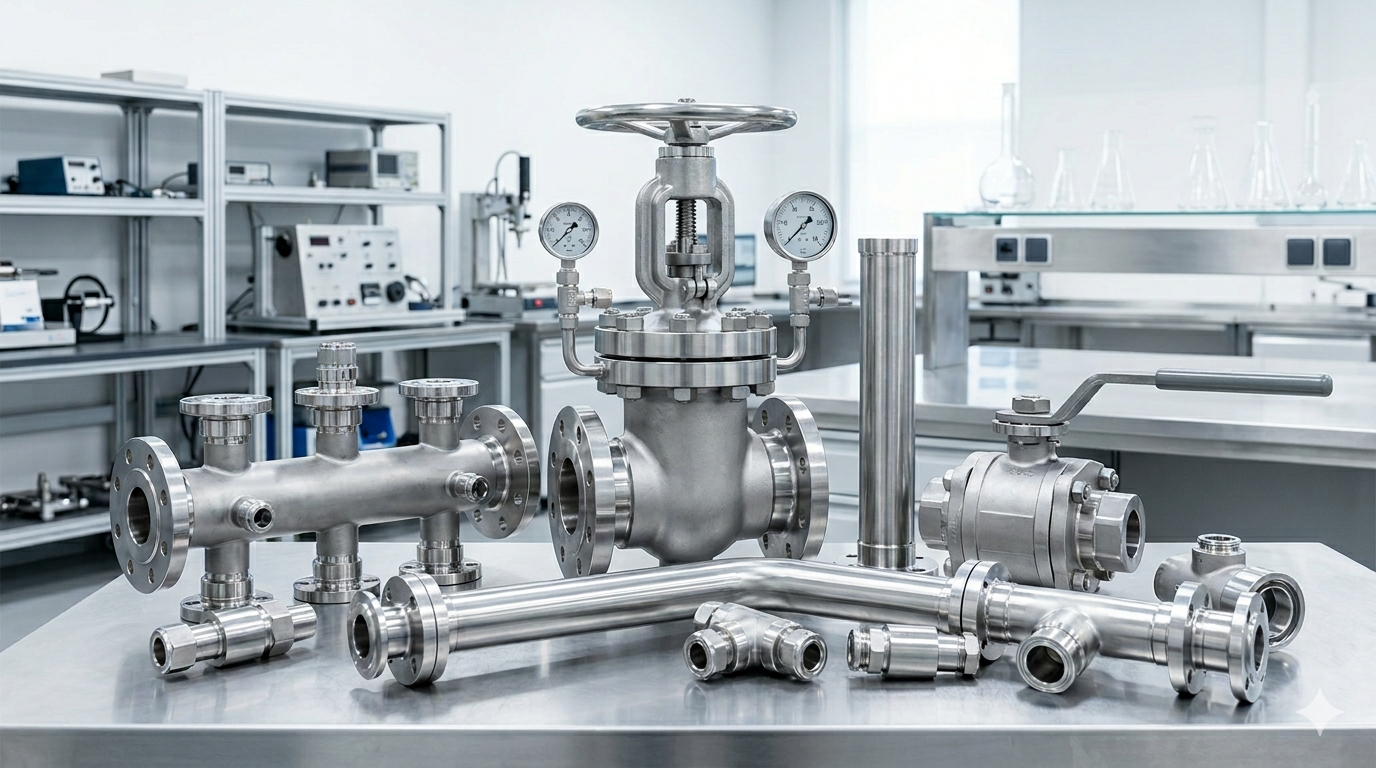
The Anatomy of Indestructibility and the Metallurgical Foundations of Stainless Steel
Stainless steel is not a static material; it is a dynamic system. Unlike carbon steels, which undergo irreversible degradation upon contact with oxygen and moisture through the formation of porous iron oxides (rust), stainless steel possesses a built-in defence mechanism. The key to this phenomenon is chromium – an element which, at a minimum concentration of 10.5% in the alloy, exhibits a greater affinity for oxygen than iron. It is precisely this thermodynamic property that causes a passive layer of chromium oxides to form immediately on the metal’s surface. This layer is invisible to the naked eye, measuring only a few nanometres thick, yet its physicochemical properties are fundamental to the existence of the entire "stainless" industry. This layer is dense, insoluble and, most importantly, self-healing. If the steel surface is mechanically damaged – scratched, cut, or struck – the exposed chromium atoms immediately react with oxygen from the atmosphere or water, rapidly restoring the protective barrier.
This phenomenon of autopassivation determines how we think about the utilisation of stainless steel. It is not merely a "better steel"; it is a material requiring a completely different technical culture – from the design phase, through processing, to maintenance. Misunderstanding this fact leads to errors such as using carbon steel tools to process stainless steel, which destroys the passive layer by inclusion of foreign iron particles and results in secondary corrosion. Therefore, the answer to the question "how is stainless steel used" is inseparably linked to the question "how is its crystalline structure cared for".
In this report, prepared as an expert study for industry professionals, we will trace the journey of this material from raw charge in the electric furnace, through complex metallurgical processes shaping it, to the most advanced applications in nuclear energy, medicine, and monumental architecture.
The Stainless Steel Production Process and Its Commercial Forms
Understanding the industrial logistics of stainless steel requires analysing its commercial forms. It is precisely the availability of specific semi-finished products that determines the cost-effectiveness of engineering projects. The product life cycle begins at the steelworks, where steel scrap (often constituting over 80% of the charge) is melted in electric arc furnaces (EAF), then subjected to a precise oxygen-argon decarburisation process (AOD). It is at this stage that the alloy’s purity and carbon content are determined, which are critical for subsequent weldability and resistance to intergranular corrosion.
Metallurgical Semi-Finished Products – Slabs, Blooms, and Billets
For rolling mills and forges, the starting material is not finished sheet but raw castings. Modern metallurgy has largely moved away from static casting of ingots in favour of continuous casting of steel (CCS), which ensures better material homogeneity and reduced losses.
|
Type of Semi-Finished Product |
Technical Characteristics |
Application in Further Processing |
|
Flat Slabs |
Blocks with rectangular cross-section, typically with widths from 600 to 2000 mm and thicknesses of 150–300 mm. |
Charge for hot rolling mills producing sheets and strips. From these, coils and thick plates are manufactured. |
|
Blooms |
Semi-finished products with square cross-section, usually exceeding 150x150 mm. Cast structure requiring recrystallisation. |
Starting material for the production of large structural profiles, rails (less commonly in stainless steel), and large free forgings. |
|
Billets |
Smaller square cross-sections (e.g., 100x100 mm to 150x150 mm) or round sections. |
Fundamental charge for rolling mills producing bars, wires, and seamless tubes. |
The quality of billets – their macrostructure, absence of bubbles and non-metallic inclusions – is a critical parameter. Defects formed at this stage are impossible to remove in subsequent processes and disqualify the material from responsible applications such as energy or aerospace industries.
Flat Products as the Foundation of the Steel Industry
Sheets and strips constitute the largest volume segment of the stainless steel market. It is crucial here to distinguish between rolling methods, which define not only dimensions but also surface structure.
Hot Rolling (Hot Rolled - 1D/1E):
This process takes place at temperatures above the steel’s recrystallisation temperature (approximately 1100°C). The steel is plastic, allowing for significant thickness reductions with lower pressing forces. The resulting surface is matte, rough, and covered with scale, which is removed during the pickling process.
- Applications: Hidden structural elements (machine frames), thick-walled pressure vessels, industrial platforms where aesthetics yield to strength and cost considerations.
Cold Rolling (Cold Rolled - 2B, 2R/BA):
Hot-rolled strip is further processed at ambient temperature. This process strengthens the material through work hardening, increasing its hardness and tensile strength. More importantly, it allows for precise thickness tolerances and excellent surface smoothness.
- 2B Finish: The most popular, smooth, matte-grey finish. Standard in the food and chemical industries.
- BA (Bright Annealed) / 2R Finish: Annealing in a protective atmosphere (oxygen-free) produces a mirror-like surface without the need for mechanical polishing. Ideal for household appliances, road mirrors, and architectural decorations.
Long Products, i.e. Stainless Steel Rods and Profiles
The segment of long products is highly diverse and includes elements that perform mechanical functions in machinery and structures.
- Round rods: Available in rolled (black), peeled (with the surface layer removed to eliminate surface defects), and drawn (calibrated) versions. Drawn rods (tolerances h9, h11) are essential in automatic lathes, where diameter precision determines the stability of the machining process.
- Sections: C-channels, I-beams, and angle sections made of stainless steel are often produced by laser welding strips of sheet metal, allowing for sharp edges (in contrast to the rounded edges of hot-rolled profiles). This enables the creation of aesthetic, modern architectural structures without visible assembly welds.
- Pipes: The division into seamless and welded pipes is crucial. Seamless pipes, produced by piercing hot billets, are intended for operation under extreme pressure (hydraulic systems, heat exchangers). Welded pipes, cheaper and more readily available in large diameters, dominate in water supply, food, and decorative installations.
Stainless Steel in Architecture and Construction
The use of stainless steel in architecture is a continuous dialogue between artistic vision and the laws of physics. Architects value this material for its "honesty" – it does not require painting or concealing its structure. Engineers appreciate its predictability and durability.
Chrysler Building – An Icon of Stainless Steel Durability
One cannot discuss stainless steel in architecture without referring to the Chrysler Building in New York. Completed in 1930, it became a testing ground for the then-new Nirosta steel (the precursor of today’s grade 304). The characteristic spire arches, inspired by Chrysler car hubcaps, and the eagle-shaped gargoyles were made from stainless steel sheets.
This experiment ended in spectacular metallurgical success. Despite nearly a century of exposure to Manhattan’s polluted air (exhaust fumes, acid rain), these panels remain in excellent condition. They require only occasional cleaning, which in the context of high-rise maintenance costs (Facility Management) generates significant savings. This is a powerful argument in Life Cycle Costing (LCC) analyses – the higher initial investment in stainless steel is repaid many times over by eliminating the need for façade renovation, which is inevitable with traditional materials.
Gateway Arch and Structural Engineering Challenges
The monumental Gateway Arch in St. Louis is an example of using stainless steel as a load-bearing element, not merely decorative. Eero Saarinen designed the structure as a "weighted catenary curve". The outer shell of the arch is made from stainless steel plates, while the interior is constructed from carbon steel. The space between them is filled with concrete (up to a certain height) and stiffeners.
This construction revealed specific technological challenges related to welding stainless steel. Engineers opted for spot welding instead of continuous arc welding to join the cladding plates with the stiffeners. This decision was driven by the need to avoid thermal distortions (warping of sheets), which are significantly greater in stainless steel than in carbon steel due to its lower thermal conductivity and higher coefficient of expansion.
Contemporary studies on the monument’s condition shed light on conservation issues. Noticeable discolorations and streaks on the steel surface were found to result from contaminants during construction (greases, markers) and the past use of acidic cleaning agents (Oakite #33), which may have damaged the passive layer under specific microclimatic conditions. This serves as a reminder that even "stainless steel" is not entirely maintenance-free over decades.
Optics and Acoustics in Architecture Illustrated by Walt Disney Concert Hall
Frank Gehry’s project in Los Angeles, the Walt Disney Concert Hall, has become an icon of deconstructivism as well as a lesson in humility for façade engineers. Initially, a stone finish was planned, but for budgetary reasons and to achieve a lighter form, stainless steel was chosen.
The façade consists of over 6,000 panels, many of which originally had a mirror finish. After the building’s completion in 2003, it became apparent that the concave surfaces acted like giant parabolic mirrors. They concentrated sunlight onto neighbouring residential buildings, raising indoor temperatures by several degrees, and dazzled drivers at nearby intersections. The problem was so severe that it was necessary to carry out matting operations (sandblasting/grinding) on the most critical surfaces after installation.
From a technical perspective, a fascinating aspect of this building is the method of panel joining. To achieve perfectly smooth, flowing lines without visible rivets or screws, engineers used advanced structural VHB (Very High Bond) adhesive tapes from 3M. These tapes not only permanently bond the metal to the substructure but also compensate for stresses arising from thermal expansion (acting as flexible expansion joints) and dampen vibrations caused by wind, which is significant for the concert hall’s acoustics.
Balanced Facades and Active Systems Made of Stainless Steel
Contemporary architecture also utilises stainless steel in environmental control systems.
- Sunshades (Brise Soleil): Steel woven meshes used on facades (e.g. the National Library of France, Nordic Embassies in Berlin) serve as light filters. They reduce interior heating, lowering air conditioning costs, while their openwork design does not obstruct users' views to the outside.
- Green Facades: Stainless steel is indispensable in so-called green wall systems. Stainless steel cables and rods serve as frameworks for climbing plants. Resistance to constant moisture and aggressive chemical compounds found in fertilisers and plant secretions makes 316 steel the only rational choice here.
Stainless Steel in Energy – Extreme Operating Conditions
The energy sector is a testing ground for the most advanced alloys. Materials must withstand a combination of high pressure, temperature, aggressive chemical media, and radiation.
Nuclear Energy and Safety at the Atomic Scale
In nuclear power plants, stainless steel constitutes the first and second safety barriers.
- Reactor Internals: Components located inside the reactor vessel, such as core barrels, fuel support plates, or control rod guide tubes, are made from austenitic steels (mainly 304 and 316). They must maintain structural integrity in the presence of a strong neutron flux, which causes radiation-induced swelling and embrittlement.
- Waste Management: Stainless steel is crucial in the nuclear fuel reprocessing process (e.g. at Cogema facilities in France). Tanks for highly active liquid waste containing nitric acid and fission products are made from special grades of 316L steel with controlled silicon content to prevent intergranular corrosion.
- 3D Innovations: Research conducted at Oak Ridge National Laboratory (ORNL) on 3D printing with 316H stainless steel opens a new chapter. Additive manufacturing allows the creation of components with geometries impossible to achieve by traditional methods, optimised for coolant flow, thereby enhancing heat exchange efficiency in the reactor core.
Offshore Wind Energy
Offshore wind farms operate in an environment with corrosion class C5-M (very high, marine). Salt aerosol is relentless on standard structural steels.
- Duplex Steel Renaissance: Duplex steels (e.g. 1.4462, 2205) play a special role in this sector. Thanks to their dual-phase structure (austenite and ferrite mixture), they offer twice the mechanical strength of 304/316 steels. This allows for "lightweighting" of structures – thinner walls mean lower turbine mass and easier installation at sea.
- Case Study – Merkur Farm: An example is the Merkur wind farm in the North Sea, where Duplex 2205 steel was used for transition pieces (connectors between the foundation and the tower). These components are exposed to continuous wave impacts (material fatigue) and seawater flooding. Using stainless steel eliminates the need for expensive paint coatings, which would rapidly deteriorate in marine conditions.
Hydrogen Economy and Material Challenges for Steel
Hydrogen, as an energy carrier, poses a unique challenge to steels: hydrogen embrittlement. Small hydrogen atoms can penetrate the metal’s crystal lattice, causing a drastic reduction in ductility and sudden cracking.
- Austenite Advantage: Austenitic steels (e.g. 316L) are significantly more resistant to this phenomenon than ferritic or martensitic steels, due to their more densely packed crystal lattice (FCC), which impedes hydrogen diffusion. Therefore, they are the preferred material for valves, pipelines, and fittings in hydrogen installations.
- Cryogenics: Liquefying hydrogen requires cooling it to -253°C. At such extreme cold, most carbon steels become as brittle as glass. Austenitic stainless steel, however, exhibits excellent impact toughness at cryogenic temperatures, making it indispensable in the construction of liquid hydrogen (LH2) storage tanks.
Applications of Steel in Medicine and Pharmacy
The use of steel in medicine goes beyond simple tools. We refer here to materials that must function inside the living body.
Implantology and Integration with the Body
The human body environment is highly corrosive (bodily fluids contain chloride ions similar to seawater).
- 316LVM Steel: A special grade of 316L steel – Vacuum Melted (VM) – is used for manufacturing implants (bone screws, plates, intramedullary nails). Vacuum melting removes gases and non-metallic inclusions, maximising resistance to pitting and fatigue corrosion. This is crucial to prevent the release of nickel ions into the body, which could trigger allergic reactions or inflammation. Although titanium is replacing steel in long-term implants, in trauma orthopaedics (temporary implants removed after bone healing) steel remains the standard due to its mechanical properties and cost.
Surgery and Dentistry – Precision Cutting
In surgical and dental instruments (drills, forceps, scalpels), hardness and sharpness of the cutting edge are priorities.
- 17-4 PH Steel (1.4542): This is a precipitation-hardening steel. Thanks to heat treatment, it achieves hardness comparable to tool steels while retaining stainless steel corrosion resistance. It is ideal for manufacturing instruments that must be repeatedly sterilised in autoclaves and simultaneously must not dull or deform.
Total Hygiene in the Pharmaceutical Industry
There is no room for error in pharmaceutical production. Reaction vessels and pipelines are made from 316L stainless steel with an electropolished surface. Electropolishing smooths out microscopic surface irregularities, preventing bacteria from adhering and forming biofilms. This allows the use of CIP (Clean-in-Place) cleaning and SIP (Sterilization-in-Place) sterilisation procedures using aggressive chemicals and pressurised steam, without the risk of corrosion to the installation.
Stainless Steel Processing Methods
Stainless steel is a favourable material for processing, provided that the technological regime is maintained. Any error during production can destroy its unique properties.
Precision Casting (Investment Casting)
Where machining would be too costly (complex 3D shapes), the lost wax casting method is used.
- Applications: Pump impellers, valve bodies, as well as architectural elements (structural nodes).
- Advantages: This method allows the production of components with very high dimensional accuracy and low surface roughness, minimising the need for further mechanical processing. In architecture, this enables the creation of smooth connections of structural elements (nodes) that transfer loads more efficiently than welded angular joints, reducing stress concentration.
Welding and the Risk of Sensitisation
Welding stainless steel is a critical process. The greatest threat is so-called intergranular corrosion.
- Mechanism: If austenitic steel is overheated (held within the temperature range of 450-850°C), the carbon contained in the alloy combines with chromium, forming chromium carbides at grain boundaries. This causes local depletion of chromium (below 10.5%), which results in the heat-affected zone losing its corrosion resistance.
- Solutions: Use of low-carbon grades ("L" - e.g. 316L, 304L) or titanium/niobium-stabilised grades (316Ti). It is also essential to remove welding discoloration (oxides) by chemical pickling or brushing to restore full passivation.
Structural Bonding
Modern methacrylate and epoxy adhesives, as well as acrylic tapes, allow stainless steel to be joined with materials that cannot be welded (glass, composites, concrete). Bonding eliminates the problem of point stresses (as with riveting) and crevice corrosion. This technology is key in modern ventilated façades and the automotive industry.
Surface Treatment – Grinding and Polishing
Surface finishing has functional significance.
- Grinding: Must be performed using abrasives (e.g. aluminium oxide, zirconia) free of iron. Using a disc previously used for grinding ordinary steel is a cardinal error – it embeds iron particles into stainless steel, which become corrosion initiation sites.
- Chemical Passivation: After mechanical processing, components are often immersed in baths of nitric or citric acid. This process removes iron contaminants and artificially accelerates the formation of a thick, dense oxide layer, ensuring maximum corrosion resistance.
History of Stainless Steel – From Accident to Revolution
The history of stainless steel is a story of serendipity – a fortunate discovery made incidentally during other research.
At the beginning of the 20th century, the armaments industry struggled with barrel erosion. Harry Brearley, a metallurgist from Sheffield working at Brown-Firth laboratories in 1913, experimented with alloys containing varying chromium content. Some rejected samples ended up in a scrap heap. Brearley noticed that after some time, some of these did not rust despite the damp English climate.
He originally named his invention "rustless steel". Legend has it that a local knife manufacturer, Ernest Stuart, testing the new material in a vinegar solution (a popular condiment in England), suggested a more marketable name: "stainless steel". Despite initial scepticism from conservative Sheffield steelworkers, who considered the invention too difficult to process, stainless steel first revolutionised the cutlery industry and then the entire engineering world.
Ecology and the Circular Economy
In the 21st century, stainless steel gains new significance as a sustainable material.
- Total Recycling: Stainless steel is 100% recyclable. Moreover, it does not lose its properties during recycling. It is estimated that globally about 95% of stainless steel products at the end of their life cycle return to steelworks.
- Scrap Input: New stainless steel is largely produced from scrap. In Europe, the average recycled content in new products is about 85%. The only limitation is the high durability of products – stainless steel "lives" so long (often over 50 years in construction) that scrap supply does not keep pace with growing demand.
- Economics: Although the initial cost of stainless steel is higher than carbon steel or plastics, its durability, lack of need for painting, and low maintenance costs mean that in the long term it is often the most economical solution. Fewer replacements, fewer repairs, less waste – this is the definition of ecology in industry.
Summary
Stainless steel is a material that has shaped modernity. From the gleaming spire of the Chrysler Building to the sterile interior of a nuclear reactor, from implants in the human spine to a gigantic offshore wind turbine – its versatility is unprecedented. Understanding how to use it requires knowledge and respect for its structure. It is not a material that forgives processing errors, but in return offers durability that outlives its creators. In a world striving for sustainable development, the role of this infinitely renewable alloy will only grow.